



While the UK imports very little gas directly from the Middle East, the country buys energy on global markets. This means that when global supply routes are disrupted, the cost of gas rises worldwide. These wholesale price increases - the price suppliers pay for the energy they sell to you - are a key driver of UK energy bills.
Although Ofgem previously announced that the energy price cap will fall in April 2026, industry analysts predict that if the current market volatility continues, the cap could rise again in July.
How do current prices compare?
Recent events have driven wholesale gas prices to 160 pence per therm, the highest level since January 2023. However, it is helpful to put this into context alongside the much larger energy crisis sparked by the Russian invasion of Ukraine in 2022. During the peak of that crisis, wholesale gas prices skyrocketed to record levels, at times exceeding 600 pence per therm.
So, while the current spike is significant and roughly three times higher than the pre-crisis average of around 40 pence per therm, prices remain well below the extreme highs of 2022. Nevertheless, the current market volatility is enough for many of the UK's top suppliers to pull or, in some cases, re-price their cheapest fixed-energy deals.
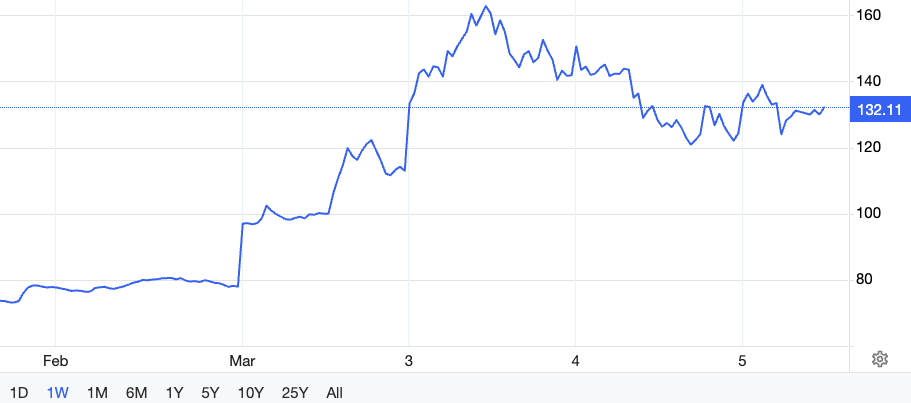

Source: Trading Economics - Natural Gas UK (GBp/thm)
Best fixed-price tariffs
A lot can change in a week. We regularly compare the best fixed-price energy tariffs and the table below shows the five best tariffs that we highlighted on 27th February 2026. Just over a week later, and as you can see, three have risen significantly, and two have been completely removed.
| Energy Tariff | Outfox Energy - 12 month fixed Dual - Mar 26 v 3.0 | FUSE - March 26 Fixed 12m - v5 | Utility Warehouse - UW Fixed Saver 76 | ||
| Fix Duration | 12 months | 12 months | 12 Months | ||
| Smallprint | Only available as a dual-fuel tariff | Dual-fuel tariff | Must sign up to at least two other services (Broadband / Mobile Phone etc) | ||
| Exit fees (payable if switching before the fixed period ends) | £150 dual-fuel | £100 dual-fuel | £150 dual-fuel | ||
| Tariff Cost | £1,650 per year approx | £1,855 per year approx | £1,655 per year approx | ||
| Annual Saving (when compared to January 2026 Energy Price Cap £1,758 per year) | £110 approx | N/A | £105 approx | ||
| Price rise when compared to 27th February 2026 (Prior to the conflict in the Middle East) | + £160 | + £345 | + £135 | No Longer Available | No Longer Available |
| Expected price cut in April (While the tariff is fixed, most suppliers have committed to passing on the savings following the government's decision to remove levies and other policy costs) | 7% approx | 4% approx | 7% approx | ||
| Who should switch? | Those wanting a tariff that undercuts the January energy price cap | Those wanting a tariff that undercuts the January energy price cap | Those wanting to know what they will be paying for the next 12 months |
Is fixing now a good idea?
A common worry is that by locking into a fixed energy tariff today, you might miss out on the upcoming price cap reduction on 1st April. However, an unprecedented change to how bills are calculated means that you won't miss out by fixing now. The government is changing the way energy bills work by shifting around £150 of policy costs away from energy bills and into general taxation.
All major UK energy suppliers have confirmed that unit rates will be reduced, even for those already on fixed deals. This means that if you fix your tariff now, you will still save an estimated 7% to 9% from 1st April. Therefore, securing a cheap fixed rate today allows you to protect yourself from future wholesale price hikes, while still benefiting from the upcoming energy bill reduction in April.


Compare energy deals
Protect yourself against high energy rates by comparing energy deals with Uswitch
- Enter your postcode
- Compare energy deals
- Switch energy in minutes
Things to consider before fixing your energy tariff
When deciding whether to lock in a fixed-rate energy deal, it is important to consider your own household budget. The energy price cap changes every 3 months, while fixed deals typically last 12 or 24 months.
Here are the main points to consider:
- Peace of mind - The real benefit to fixing your energy deal is the peace of mind that you know exactly what you will be paying for your energy over a set period.
- Protection from further increases - Securing a fixed tariff now can protect your household budget from potential price increases later in the year if wholesale prices continue to rise.
- Further reductions even if you fix - Thanks to the upcoming policy changes, fixed tariffs locked in today will still see a price drop in April.
- Exit fees - Some suppliers have recently introduced or increased exit fees on their fixed contracts, meaning it could cost you money if you decide to leave your current fixed deal early.
- Is it cheaper than the upcoming energy price cap? - When comparing options, look for a fixed tariff that is meaningfully cheaper than the confirmed energy price cap figures for April (£1,641 per year)
What to do if you are struggling
If you are worried about a spike in energy bills, support is available. Your energy supplier may be able to help you arrange an affordable repayment plan if the cost of energy is becoming overwhelming, so it is best to contact them as soon as possible. If you receive benefits, you may also be able to clear your debt with your energy supplier via the Fuel Direct Scheme.
Finally, there are a number of charities and organisations that can provide free financial advice. We've provided links to a selection of the best websites below:
- MoneyHelper (previously the Money Advice Service)
- The money charity
- StepChange
- National Debtline
- Turn2us
- Citizens Advice
- Payplan
£200 Pension Cashback Offer
Make a qualifying deposit or transfer a pension to our partner Interactive Investor.
- Deposit or transfer a pension of at least £20k and you could earn £200 cashback
- Terms and Fees apply, Capital at risk
- New & Existing customers opening a SIPP
- Offer ends 31st July 2026
Before starting your transfer, check you won't lose any valuable benefits (such as guaranteed annuity rates or a lower protected pension age) and find out what exit fees you might have to pay

