



What is the Real Living Wage?
The Real Living Wage is the hourly rate calculated based on the minimum cost of living, accounting for rising prices for goods and services. It aims to reflect the earning needs of working people who may otherwise struggle if they were paid the government’s minimum wage.
The Real Living Wage is the result of a campaigning movement that started in 2001 as Citizens UK and is now known as The Living Wage Foundation. There are over 16,000 employers signed up to pay the Real Living Wage, and nearly half a million employees benefit from the enhanced wage. Employers including, IKEA, Google, Nationwide, Aviva and more recently Uniqlo make the commitment to pay workers higher wages based on the organisation's recommended hourly rate. One in seven workers receives higher wages as a result of the initiative, while calls continue for more employers to sign up.
How is the Real Living Wage different to the Statutory Minimum Wage?
The Statutory Minimum Wage (which includes the National Living Wage for those aged 21 and over) is the legal minimum employers must pay, set by the government based on economic factors. In contrast, the Real Living Wage is a voluntary rate set higher by the Living Wage Foundation, calculated independently based on the actual cost of living.
How much does the Real Living Wage pay?
The Real Living Wage is a voluntary rate calculated by The Living Wage Foundation. It is now set at £13.45 per hour for workers across the UK, up from £12.60. London workers should receive £14.80 per hour, up from £13.85, if their employer is signed up to the foundation.
Although the revised Real Living Wage for 2025/26 was announced on 22 October 2025, participating employers have until 1 May 2026 to implement it for their workers.
Who will benefit from the increased Real Living Wage?
The Real Living Wage applies to workers at accredited employers, who have until the 1st of May 2026 to implement the increased hourly rate. Half of the FTSE 100 companies are signatories to the Real Living Wage scheme as well as a number of universities, football clubs and charities. You can check if an employer is signed up to the Real Living Wage using the Accredited Living Wage Employers search link.
Katherine Chapman, Director of the Living Wage Foundation says, “We all need a wage that covers life’s essentials, and the real Living Wage is the only UK wage rate independently calculated based solely on what is needed to cover rising living costs. The new rates announced today will make a massive difference to workers and their families, helping them to better cope with the costs of rent, bills, food and other essentials, and to live with stability and security. It remains a tough time for low-paid workers, with 4.5 million people still earning less than the real Living Wage and struggling to escape the grip of in-work poverty. That’s why we encourage as many employers as possible to do the right thing and commit to paying a wage that reflects the real cost of living. Despite the challenges businesses face, our movement continues to grow, with over 16,000 employers now accredited. These leading employers are showing that paying the real Living Wage has a far-reaching impact on staff, businesses and society.”
What difference does the Real Living Wage make?
When compared to the minimum wage set out by the government, those working for employers who pay the Real Living Wage not only earn more but also earn the same regardless of their age as there are no age bands. The Living Wage Commission which is made up of a mixture of Living Wage employers, independent experts as well as Trade Union and civil society representatives oversee the process by which the Real Living Wage is agreed. The calculation is different to that used by the government as it is based on research linked to the Minimum Income Standard - a report that reflects the minimum living costs for different household types. Among other factors, the report examines what members of the public believe is the minimum acceptable standard of living in the UK.
Contrastingly, the Government's mandated minimum wage and national living wage are calculated using industry recommendations and a percentage of median earnings respectively. Workers receiving the UK Real Living Wage stand to earn around £2,385 more over a year compared with those earning the national living wage when working 37 hours per week. The difference in annual earnings increases to over £6,600 more for those under the age of 21 on the Real Living Wage compared with earning the minimum wage.
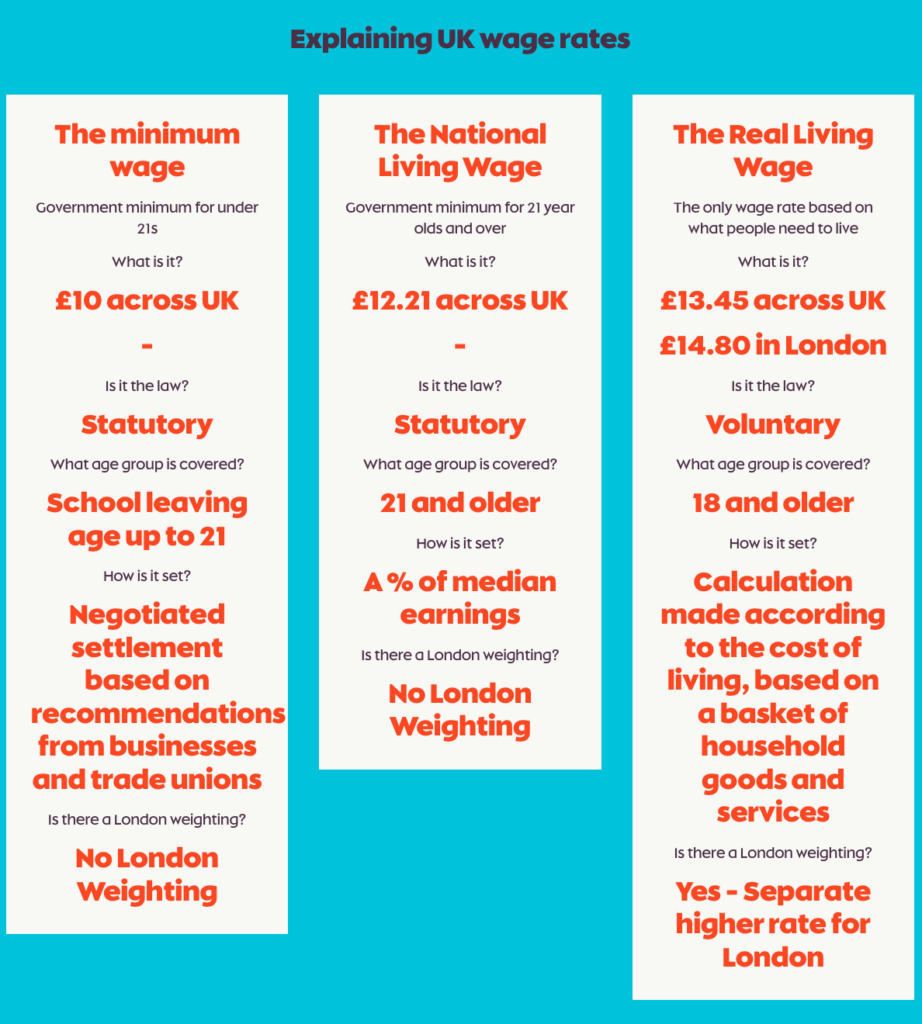

Source: www.livingwage.org.uk


£200 Pension Cashback Offer
Make a qualifying deposit or transfer a pension to our partner Interactive Investor.
- Deposit or transfer a pension of at least £20k and you could earn £200 cashback
- Terms and Fees apply, Capital at risk
- New & Existing customers opening a SIPP
- Offer ends 31st July 2026
Before starting your transfer, check you won't lose any valuable benefits (such as guaranteed annuity rates or a lower protected pension age) and find out what exit fees you might have to pay

