

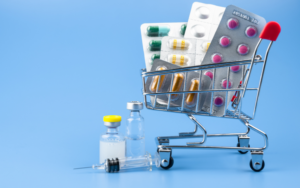

Still, for those living in England and needing regular prescriptions the costs can easily add up, so here are my tips to reduce that cost.
Free prescriptions
Free prescriptions are available to those in certain circumstances and for certain medications.
You normally won't have to pay for:
- medicines administered in a hospital or clinic (unless prescribed to take away)
- prescribed contraceptives
- certain sexually transmitted disease treatments
- medicines prescribed to treat tuberculosis and some mental health conditions
People in the following groups may receive a cut or reduction to the cost of prescriptions:
- under the age of 16 or over the age of 60
- in full-time education and aged 16-18 years old
- pregnant or had a baby in the last 12 months
- if you or your partner receive Income Support, Income Based Job Seekers Allowance, Universal Credit, Income-related Employment and Suport Allowance, or Pension Credit Guarantee Credit
- if you have a war pension exemption certificate
- if you have a valid Medical Exemption Certificate
Prepayment prescription certificates that reduce the cost of long-term medication
Those paying for regular prescriptions may benefit from purchasing an NHS prescription prepayment certificate (PPC) which covers all your charges for a set period.
- 3-month certificate costs £32.05 - cheaper if you have 4 or more prescriptions in the period
- 12-month certificate costs £114.50 - cheaper if you have 12 or more prescriptions in the period (you can pay 10 instalments by direct debit to spread the cost)
Application forms for an NHS prescription prepayment certificate can be collected from most Post Offices or major pharmacies or you can simply buy an online Prepayment Prescription Certificate.
Backdating and claiming prescription refunds
If you choose to buy a prepayment prescriptions certificate, you can choose to backdate it by up to a month and claim a refund for prescriptions you paid for before applying for your PPC. Prescriptions costs must be reclaimed within three months of you paying them.
You will need to complete an FP57 form which is only available through your dispensing pharmacist. Also, if you become eligible for free prescriptions after buying a PPC, you can use the same form to request a refund on any unused time period covered by the certificate.
Prepayment prescription certificate for Hormone Replacement Therapy (HRT)
Menopausal or perimenopausal women may be treated with Hormone Replacement Therapy (HRT) - HRT is the overarching name for a number of medicines, prescribed to treat the symptoms of menopause or perimenopause. Usually, HRT involves taking a combination of medications - some will tackle the fall in certain hormones while others will alleviate some of the risks associated with taking these drugs.
Since most women who are treated with HRT require more than one kind of medication which they may need to take for a number of years, the cost of the prescription for those who do not qualify for cost exemptions can add up. If you are prescribed Hormone Replacement Therapy medication and require more than two medicine prescriptions in a year, then you can save money by buying an HRT Prepayment Prescription Certificate. The HRT PPC costs £19.80 as a one-off charge which provides you with a certificate for 12 months and covers HRT medicine prescriptions during this period. If you require at least two medicine prescriptions for HRT in a year, you will pay £19.80 so purchasing an HRT PPC will save you the cost of any HRT medicines beyond these.
Women may find that the HRT drugs are prescribed to them monthly while the correct combination and dosage of drugs is established. The medication can later be bundled into 3-month supplies meaning that you are prescribed more medication under one prescription for each. Immediately this would reduce the cost of your medication if you have to pay for it but it will still exceed the cost of using an HRT PPC. Here we describe some common HRT drug combinations that you may need as part of hormone replacement therapy and what they may cost you privately, through the NHS and using an HRT PPC.
Cost comparison for prescribed HRT medicines
| Medications prescribed for menopausal or perimenopausal symptoms | Annual private prescription cost^
(based on monthly prescription cycle) |
Annual NHS prescription cost
(based on monthly prescription cycle) |
Annual HRT Prepayment Prescription Certificate cost | Annual saving
(when using an HRT Prepayment Prescription Certificate) |
| Oestrogen only | £528 | £118.80 | £19.80 | £99 |
| Oestrogen tablets, gel or patches + Progesterone tablet | £684 | £237.60 | £19.80 | £217.80 |
^ the private prescription costs are based on an average of pricing taken from Boots, Superdrug and a Menopause Specialist Clinic
Not all HRT medicines are covered by the prepayment certificate (Testosterone is not) but you can check if it covers your medicine if you are being prescribed HRT. Women receiving HRT usually require a repeat prescription of drugs, and the HRT PPC is a very useful way of keeping the costs of treatment low. If you are currently receiving HRT through a private prescription you may be paying even more than the standard prescription costs - consider asking your NHS GP to prescribe your medicine instead so that you can elect to cover the cost with the HRT PPC.
In addition, just like a standard PPC, you can backdate an HRT PPC by up to 1 month and claim back refunds if you have paid for NHS prescribed HRT medicine during that time.
How to save money on over-the-counter, non-prescribed medications
Minor ailments can sometimes be treated through advice from a pharmacist who may dispense non-prescription medications without the hassle of seeing your GP. Before paying for your medication, it is always worthwhile asking the pharmacist if there is a cheaper equivalent available. Many non-prescription medications sold in pharmacies can carry higher price tags simply due to the brand and there could be a cheaper version of the same medication that could help you to save money - be sure to check with your pharmacist before selecting a different brand or version of the medication you need.
How does the NHS Minor Ailments Scheme reduce the cost of non-prescription medications?
If you are exempt from paying for prescriptions but need to buy non-prescription medications, you can get these free of charge if your GP surgery is registered for the NHS Minor Ailments Scheme. The scheme allows those who are exempt from prescription costs to access non-prescription medications for certain minor ailments that could include:
- Back-ache
- Colds
- Coughs
- Diarrhoea
- Hay fever
- Head lice
- Heartburn and indigestion
- Insect bites and stings
- Mild eczema and dermatitis
- Nappy rash
Extra tips for saving money on prescription medications
Some commonly prescribed medications can be purchased over the counter without a prescription. This can sometimes work out cheaper than the cost of a prescription, always ask your pharmacist. However, if your doctor has prescribed a large amount of drugs then it could still be cheaper under a prescription.
Private prescriptions
If you have attended a non-NHS doctor (maybe for emergency diagnosis or as part of a scheme) or have requested drugs not supplied by the NHS any prescription will be charged at the full cost of the drugs. In this case, it would be advisable to shop around rather than assume costs will be the same everywhere. Major supermarkets and online pharmacies often have the cheapest deals.

£200 Pension Cashback Offer
Make a qualifying deposit or transfer a pension to our partner Interactive Investor.
- Deposit or transfer a pension of at least £20k and you could earn £200 cashback
- Terms and Fees apply, Capital at risk
- New & Existing customers opening a SIPP
- Offer ends 30th June 2026
Before starting your transfer, check you won't lose any valuable benefits (such as guaranteed annuity rates or a lower protected pension age) and find out what exit fees you might have to pay

