



What is Bitcoin?
Bitcoin is a type of cryptocurrency, essentially a digital token that you can use to buy, sell or trade goods and services. It does not have any physical form – so you cannot touch or hold Bitcoin – as it exists only digitally. Not only is Bitcoin used as a unit of virtual currency, but its own value can make it a desirable option for those looking to make a profit by trading and investing in the coins themselves, although its value is infamously volatile.
Bitcoin was created by an anonymous individual or group, known only as 'Satoshi Nakamoto', in 2008. Beyond this, the details of Bitcoin's inventor(s) and origins are sparse. It was first used in 2009, when Bitcoin was released as open-source software. This meant that although Satoshi Nakamoto held its copyright, Bitcoin users were granted the right to use, alter, and distribute it to anyone for any purpose. Since then, Bitcoin has grown in popularity around the world at least partly due to its collaborative nature and the compelling mystery of its background.
How does Bitcoin work?
Bitcoin can be used as a digital currency – similarly to traditional currency, such as pounds or dollars – except that it is solely virtual. The virtual home for Bitcoin is known as the blockchain, which is run by a vast network of advanced computers around the world, creating and keeping track of all the Bitcoins in existence. One of the key features of Bitcoin is that it is decentralised, meaning there is no overarching bank, institution or authority which can control it, unlike traditional currencies. Instead, it is managed using 'peer-to-peer' technology across this huge number of computers.
Bitcoins are often described as being stored in a digital 'wallet', but the reality is that Bitcoins never leave the blockchain. Each Bitcoin investor has their own public and private keys, which function like the username and password to an account, that they use to interact with their Bitcoins on the blockchain. These keys are crucial, as anyone that has access to both of them can access that individual’s Bitcoin holdings, so the 'wallet' that they are stored in must be as secure as possible. You can read more about what a cryptocurrency wallet is, and the different types available, in our article 'What is a cryptocurrency wallet?'.
In addition, Bitcoin ownership and trading is theoretically anonymous, though future regulation in the UK could change this. Transactions are identified using only the enactors’ public and private keys. This has made Bitcoin a popular avenue for criminals, who take advantage of its anonymity.
How to mine Bitcoin
Individual Bitcoins are created by a process known as 'mining', which is the act of maintaining and adding to the worldwide record of Bitcoin transactions – known as the 'ledger' – by using computer processing power to solve complex mathematical equations. Computers that solve the equations and contribute to this ledger are rewarded in fractions of Bitcoin, in what is called a 'proof-of-work' scheme. People with access to computers powerful enough to undertake Bitcoin mining, known as 'rigs', can therefore be rewarded with some newly-generated coins.
Ways to mine Bitcoin
There are four different ways that you can use computers to mine Bitcoin:
- GPU mining - Using a computer's in-built graphics processing unit in order to perform the mathematical equations. The most widespread and well-known method of crypto mining.
- CPU mining - A slow, older version of crypto mining utilising advanced computer processors to solve the equations. This used to be a popular option several years ago, but is now considered too time-consuming and electricity-intensive.
- ASIC mining - This uses Application-Specific Integrated Circuits, computers designed specifically to mine crypto and known for being more productive than alternative methods.
- Cloud mining - Either paying someone (usually a large corporation) to rent out their rig or using a cloud mining service to rent the computing power from a mining farm for your own device.
Each of these are extremely complicated processes which demand huge amounts of electricity. Bitcoin mining reached an all-time high of 149 terawatt-hours (TWh) during 2020, while Google used just 12.2 TWh over the same period. Indeed, analysts have warned that the annual amount of electricity used for Bitcoin mining could power Switzerland for a year.
You can read more about Bitcoin mining, the different ways you can do it, and why it’s so bad for the environment in our article 'Cryptocurrency mining: What it is, how it works and how to mine Bitcoin'.
How many Bitcoins are there?
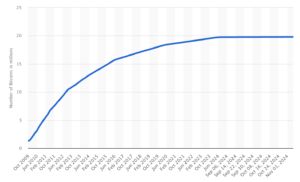
There are currently around 19.98 million Bitcoins in circulation on the blockchain. This figure has been increasing gradually since 2009, when Bitcoin was first released to the public, and changes every 10 minutes or so as the mining process generates more Bitcoins.
As part of Bitcoin's core coding, Satoshi Nakamoto stipulated that there can only ever be 21 million Bitcoins in existence. This helps to keep Bitcoin desirable, and valuable, as there will always be a limited supply. Therefore, over 80% of all the Bitcoins that will ever exist are already in circulation. The more Bitcoins that are in circulation, however, the fewer Bitcoins are generated as part of the mining process. At the moment, each miner’s contribution to the global blockchain – called a 'block' – is rewarded in 3.125 Bitcoins.
This number will reduce over time as the total number of Bitcoin approaches its final cap, so the more Bitcoins there are, the longer it takes to create new ones. At the moment, 144 blocks per day are mined on average, so the average amount of new Bitcoins mined per day is 450 (144 x 3.125). It will still take a long time for all Bitcoins to be mined and it is estimated that the final Bitcoin will be mined in the year 2140.
The following graph demonstrates how the number of Bitcoins has grown over time to reach the January 2026 level of 19.98 million:

Is Bitcoin safe?
There is no straightforward answer to whether or not Bitcoin is safe. Bitcoin's value tends to swing to extremes at short notice – leaving investors vulnerable to large losses without much warning – and there is little regulatory framework in the UK to protect investors. Bitcoin investments are not protected under the Financial Services Compensation Scheme (FSCS), which usually covers investors’ assets up to £120,000 in the event that something goes wrong. This does not apply to Bitcoin, so if you invest in it and your holdings are compromised or lost entirely, there is no way of reclaiming your money and it would effectively be gone forever.
Additionally, the Financial Ombudsman Service (FOS) is currently unable to provide help with complaints, unless the complaint is a result of a bank refusing to reimburse a customer who has been the victim of fraud.
Some cryptocurrency exchange platforms – where you go to buy, sell or trade Bitcoin – are registered or pending registration with the UK’s Financial Conduct Authority (FCA). Although this can seem like a guarantee that your Bitcoin will be secure if you purchase it through one of these exchanges, the FCA’s role is limited, so your assets are still not fully protected if they are lost or compromised.
However, millions of people around the world invest in Bitcoin on a daily basis, and as long as you are informed and prepared for the associated risk to your capital, Bitcoin investing is not dissimilar from other high-risk asset classes. You can read more about the safety of Bitcoin and other cryptocurrencies in our article 'How are cryptocurrencies regulated in the UK?'.


£200 Pension Cashback Offer
Make a qualifying deposit or transfer a pension to our partner Interactive Investor.
- Deposit or transfer a pension of at least £20k and you could earn £200 cashback
- Terms and Fees apply, Capital at risk
- New & Existing customers opening a SIPP
- Offer ends 31st July 2026
Before starting your transfer, check you won't lose any valuable benefits (such as guaranteed annuity rates or a lower protected pension age) and find out what exit fees you might have to pay

