

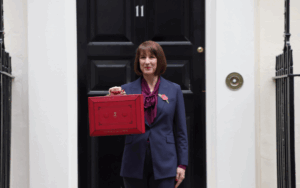

With the budget now two months away, these proposals are just one example of the many jostling for position as Rachel Reeves finalises the Treasury's plans.
Adam Corlett, an economist at the Resolution Foundation, said: "Any tax rises are likely to be painful but given the fallout from the recent employer National Insurance rise, the Chancellor should do all she can to avoid loading further pain onto workers’ pay packets.
"She can do this by switching our tax base away from employee National Insurance and onto income tax, which is paid by a far broader group in society. This should form part of wider efforts to level the playing field on tax, such as ensuring that lawyers and landlords face the same tax rates as their clients and tenants."
Why are these changes being proposed?
It will have been almost impossible to miss the various reports of a gloomy economic outlook for the UK in recent weeks as we head towards the budget.
Reeves is unsurprisingly keen to avoid breaking either the fiscal rules she set out when Labour came into power last year, or the manifesto pledge not to raise income tax, national insurance or VAT on working people, but there is a growing expectation that something will have to give. The government was unable to push through its planned welfare cuts in the face of a backbench rebellion earlier this year, while borrowing costs have increased pressure on the treasury to find an alternative.
We can therefore expect more and more proposals from think tanks across the political spectrum as we approach the budget, with different interests looking to gauge the popularity of their own ideas for the economy, while the government watches on to see what generates a positive public reaction - or at least an only mildly negative one.
The Resolution Foundation is proposing these tax changes at least in part as an effort to avoid more drastic tax rises, but also to spread the tax burden more equally across those who pay employee National Insurance contributions and those who do not.
Who would be affected by the change?
Workers who pay both income tax and employee National Insurance contributions would not notice any difference in their pay, as the rate adjustments would cancel each other out. The proposed changes would affect people who pay income tax but do not pay employee National Insurance contributions. For them, the reduction to employee National Insurance would have no impact, but their income tax rate would increase by 2%. The major groups this covers are pensioners, landlords and the self employed. There are around 4.3m self-employed workers in the UK and 8.7m pensioners who pay income tax, though this is expected to rise next year with the planned State Pension increase taking the New State Pension to just £35.40 below the tax-free allowance.
This means that some pensioners could be hit with both having to pay income tax for the first time in retirement, and at a higher rate than they may have expected. However, even with the planned 2026 increase, the New State Pension will still be just over £12,500 a year, which is unlikely to be a sustainable income for many pensioners.
For most retirees, the State Pension serves as a top-up, rather than a sole source of income. A private pension would function as the core income stream, which means they will likely already be paying income tax anyway.
We cover the importance of private pensions in our article ‘What is a private pension?’.
Of course, a 2% tax hike will be tough for many pensioners to accept, not to mention the millions of self-employed individuals not in receipt of government support. However, in the run-up to the budget, we can expect more and more reports on which groups will be expected to pay to plug the UK's fiscal gap.


£200 Pension Cashback Offer
Make a qualifying deposit or transfer a pension to our partner Interactive Investor.
- Deposit or transfer a pension of at least £20k and you could earn £200 cashback
- Terms and Fees apply, Capital at risk
- New & Existing customers opening a SIPP
- Offer ends 31st July 2026
Before starting your transfer, check you won't lose any valuable benefits (such as guaranteed annuity rates or a lower protected pension age) and find out what exit fees you might have to pay

