
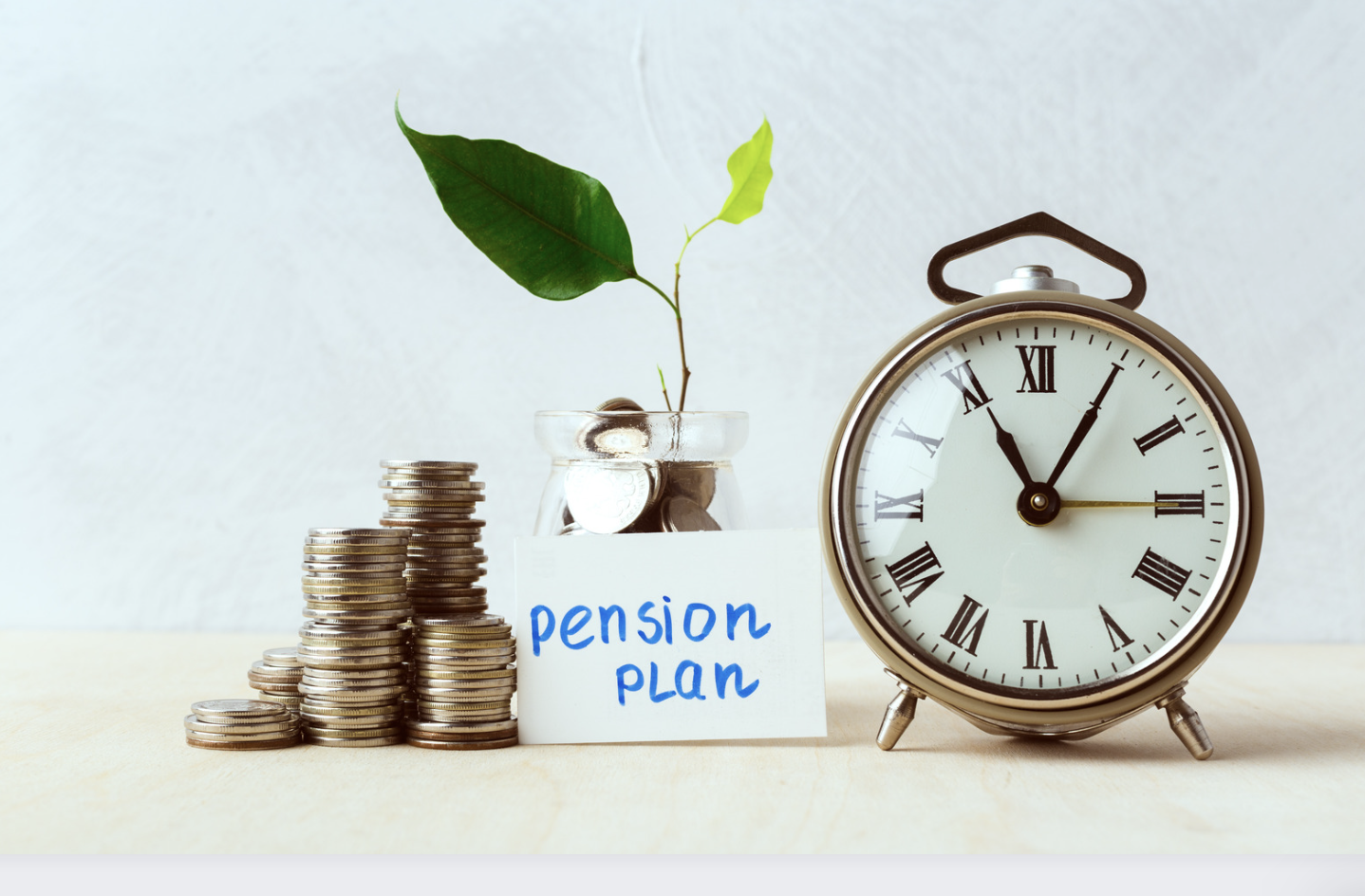
 Most of us will want to stop working at some point in our lives. When that day comes and the paychecks stop, you will need a new source of income to live off. A private pension plan is a savings pot that you can build up and grow over your working life to then spend when you retire. It can be started by your employer (a workplace pension) or by an individual (a personal pension). You can use your pension pot to buy a guaranteed income, called an annuity, or steadily withdraw the money as an income, known as pension drawdown. In this article we explain the basics of a private pension and why you might need one. We also include links to some of our deep-dives into other pension topics.
Do I need a private pension?
A private pension is a financial product that requires you to build a pot of savings that will grow and eventually fund your income in retirement. Once you retire and stop working, you will stop earning a regular salary. As most people plan to retire at some stage, it is likely you will need a private pension to replace your salary in order to meet your expenses. Your private pension does not necessarily need to provide you with the same level of income as your salary, as many people find the cost of living decreases as they get older. For example, you may have paid off your mortgage or not need to support your children anymore. However, you will still need enough money to pay for food, bills and to enjoy life while not needing to work anymore.
During your working life you will need to pay into your pension regularly to grow your retirement pot. This can be achieved through contributing a percentage of your salary to your workplace pension, paying into your own personal pension or a combination of both. The advantage of a workplace pension is that your employer will also usually have to make contributions, though you will get more flexibility and control with a personal pension. Read our article 'Can I have a personal pension and a workplace pension?' to learn more.
How a private pension works
The majority of private pensions in the UK are ‘defined contribution’ pensions. This means that the money you get at your retirement age will be based on the value of your retirement pot. Some people may still be able to access a ‘defined benefit pension’, which pays out a figure based on your final salary. As most pensions are defined contribution, there is a lot riding on how your pension plan performs and how much you pay in. If you pay in a large percentage of your salary and the investments perform well, you could be looking at a comfortable retirement, or even be able to stop working earlier than you expected.
If your investments underperform, you may find that you need to work for a bit longer or adjust your living costs. Read our article ‘Best Pension in the UK’ to find out more about choosing the right pension provider.
One scenario in which you might not need a private pension is if you plan to live off State Pension payments. You can read more about the State Pension in our article ‘Will I get a state pension?’.
We go into more detail on how a private pension works in our article 'How do private pensions work?'.
Paying tax on private pension schemes
The money you pay into your pension pot will be tax free unless your annual contributions exceed your annual income or £60,000, whichever is lower. All of your pension contributions will be topped up by a 25% tax relief bonus, which your provider will claim automatically from the government. You can get more tax relief through completing a self-assessment tax return if you are a higher or additional rate taxpayer.
You may need to pay tax when you eventually spend your pension savings in retirement.
Spending your private pension
Once you reach retirement age – currently 55, though rising to 57 in 2028 – you can withdraw your private pension. You can take out the first 25% tax free, either as a lump sum or in smaller withdrawals, up to the £268,275 lump sum allowance (LSA) limit. The rest will be considered as income, so will be eligible for income tax. Find out more about withdrawing your pension by reading our article ‘Can I withdraw my pension?’.
You can withdraw your pension funds steadily – known as pension drawdown – or purchase an annuity. An annuity is a financial product that guarantees you an income for a certain period of time or for the rest of your life. You can read more in our article ‘What is an annuity pension?’.
Paying into a private pension plan
It is important to know how much you need to pay into your private pension in order to build an adequate retirement income, while not running out of money at the end of the month.
You can pay in through regular monthly contributions or one-off lump sums. The best option for you will likely depend on how you are paid and how much disposable income you have.
You should also think about how long you have left until you retire. The number of years you will be contributing to a pension will affect how much each contribution needs to be. If you have not paid into a pension for a while and now need to build your pot quickly, your monthly contributions will likely need to be higher.
You can learn more about private pensions by reading our article ‘How do private pensions work?’. Also, to help understand how much you may need when it comes to your retirement, check out our handy pension calculator.





 MTTM AI (beta)
