

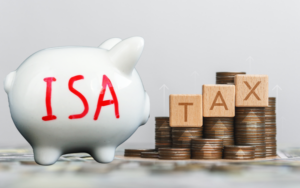

Following weeks of speculation regarding potential loopholes, HM Revenue & Customs (HMRC) published a factsheet confirming the new measures, stating that they will "minimise the opportunity for the lower Cash ISA limit to be circumvented, while preserving the flexibility needed for legitimate investment activity within non Cash ISAs."
In this article, we explain how the new tax charge will work, how cash and cash-like assets will be treated by the Treasury and what it means for your savings in the coming years.
Why is a tax on Stocks & Shares ISA cash being introduced?
Currently, any cash you hold inside a Stocks & Shares ISA, whether it is waiting to be invested or simply being held back. earns interest completely tax-free. However, from 6th April 2027, the rules for savers aged under 65 are changing. While the overall annual ISA allowance will remain at £20,000, the amount that can be put into a traditional Cash ISA will be capped at £12,000 for those under the age of 65. To use the remaining £8,000 of their tax-free allowance, savers will need to utilise other products, such as a Stocks & Shares ISA.
The government was concerned that savers could simply deposit their remaining £8,000 allowance into a Stocks & Shares ISA and leave it as uninvested cash. This would have effectively allowed them to bypass the new £12,000 Cash ISA limit and continue earning tax-free interest.
The new 22% tax on uninvested cash explained
From 6th April 2027, the government will apply a flat 22% tax charge on any interest generated from uninvested cash held within an investment ISA. Importantly, while the £12,000 Cash ISA deposit limit only affects those under 65, this new 22% tax charge on uninvested cash interest will be applied to savers of all ages. Furthermore, the tax rules will also apply to uninvested cash held within Innovative Finance ISAs.
Transfer restrictions
To further enforce these new limits, the government will introduce new transfer restrictions. Savers under the age of 65 will be prohibited from transferring money out of a Stocks & Shares ISA and into a Cash ISA. However, once you reach 65, this rule falls away, giving you full flexibility to move your tax-free savings between accounts as you see fit.
What counts as 'cash'?
Under the new Treasury rules, any uninvested money sitting idle in your Stocks & Shares ISA or Innovative Finance ISA is classed as 'cash' and from April 2027, Money Market Funds (MMFs) will also be officially categorised as 'cash-like assets'. These type of funds invest in short-term, highly rated debt issued by governments and corporations, offering returns that often rival those of top-paying savings accounts. Because they are considered low-risk and easily accessible, many investors use them as a safe harbour for their money. For more information on Money Market Funds, check out our podcast Episode 432, where we provide a detailed explanation on how they work.
Will Money Market Funds (MMFs) be taxed?
No, Money Market Funds will not be subject to the new 22% tax charge. Instead, the government is introducing a new rule regarding how much of your portfolio can be held in these funds. From April 2027, cash-like assets such as MMFs will only be permitted as partial allocations. This means you will no longer be allowed to hold 100% of your investment ISA in Money Market Funds.
As long as your ISA contains at least one qualifying investment, such as a standard investment fund, an individual share, or a bond, you can continue to hold Money Market Funds within your portfolio. There is currently no minimum size requirement for this qualifying investment.
If you are unsure about how the new ISA tax rules are likely to impact your finances, you should speak to an independent financial adviser. If you don't have a financial adviser you can trust, then check out our article '10 tips on how to find a good financial adviser'.
How will the 22% tax work in practice?
Below we have provided a worked example to illustrate how the 22% tax charge on uninvested cash could affect your returns once the new rules take effect in April 2027.
Imagine you have £10,000 sitting as uninvested cash within your Stocks & Shares ISA for a full year, earning an interest rate of 3.8%.
Under the current rules (prior to April 2027):
- Interest earned - £380
- Tax deducted - £0
- Total take-home interest - £380
Because all interest generated within an ISA is currently tax-free, you get to keep the entire £380.
Under the new rules (from April 2027):
- Interest earned - £380
- 22% tax charge applied to the interest - £83.60
- Total take-home interest - £296.40
If you were holding £20,000 in uninvested cash at the same 3.8% rate, the tax charge would double to £167.20 a year
The Impact on Your Returns
The introduction of the 22% tax charge means that your effective interest rate drops significantly. Instead of earning a tax-free return of 3.8%, the tax deduction effectively reduces your annual return to 2.96%. It is important to note that the 22% charge is only applied to the interest you earn, not to the underlying £10,000 capital.
For those holding large sums of uninvested cash, the new rules will noticeably reduce the amount of interest you can earn. The example highlights the government's intention to discourage savers from using Stocks & Shares ISAs as high-interest cash savings accounts.
Will the Personal Savings Allowance mean you won't have to pay tax?
Unfortunately, the short answer is no. The Personal Savings Allowance currently allows basic-rate taxpayers to earn up to £1,000 in interest completely tax-free each year, while higher-rate taxpayers can earn up to £500. However, this allowance is designed specifically for interest earned on standard, non-ISA savings or everyday bank accounts.
Because the new 22% levy is a strict, flat-rate charge designed specifically to prevent savers from bending the new ISA rules, it sits entirely outside the standard income tax system. This means the 22% charge will be applied directly to the interest generated by your uninvested ISA cash, and you will not be able to offset or reduce it using your Personal Savings Allowance.
What the new ISA rules mean for your savings
While the confirmation of the 22% tax charge brings clarity, there is no need for immediate panic. Further details will be released in the coming weeks following a consultation with the investment industry, and regulations will be laid out in the autumn, with the rules coming into force from 6th April 2027. It means that for the current 2026/27 tax year, you can continue to place your entire £20,000 allowance into a Cash ISA, should you wish.
If you currently invest through a Stocks & Shares ISA, it would be wise to review how much uninvested cash you hold. While it might be sensible to keep a small cash buffer to cover platform fees or capitalise on market movements, holding large sums of uninvested cash will become less tax-efficient from 2027.
Investors wishing to maintain a cash-like buffer in their portfolio could consider holding at least one qualifying investment alongside a Money Market Fund once the new rules take effect. If you are unsure about the best way to manage your savings or investments, it may be beneficial to speak with an independent financial adviser. They can help you understand your options and build a strategy that suits your personal financial circumstances.

£200 Pension Cashback Offer
Make a qualifying deposit or transfer a pension to our partner Interactive Investor.
- Deposit or transfer a pension of at least £20k and you could earn £200 cashback
- Terms and Fees apply, Capital at risk
- New & Existing customers opening a SIPP
- Offer ends 31st July 2026
Before starting your transfer, check you won't lose any valuable benefits (such as guaranteed annuity rates or a lower protected pension age) and find out what exit fees you might have to pay

