


What has changed?
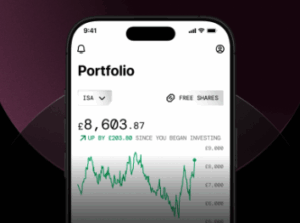
A statement on Freetrade's website explains that 'following customer feedback, the Basic plan will now give all customers access to the essential tools they need to build their wealth.
It means that from 1st September 2025, the following will be available via its 'Basic' (free) plan:
- An ISA, or individual savings account. Invest up to £20,000 each year and pay no tax on interest, capital gains, or UK dividends.
- Commission-free access* to all equities, ETFs, and investment trusts offered on Freetrade. Trade over 6,500 instruments across US, UK, and European markets
- The ability to automate your investment strategy with recurring orders, Direct Debits, stop losses, and limit orders
- Pre-market trading on select US stocks
*On the Basic plan, an FX fee of 0.99% applies to any USD or EUR trades.
Is Freetrade's ISA the cheapest?
While the recent change to its subscription plans makes it cheaper to invest via a Freetrade Stocks & Shares ISA*, there are still fees that you need to consider when comparing costs. Freetrade does not charge commission fees; however, it does charge FX fees on US stocks of between 0.39% and 0.99%, depending on the subscription plan you choose. Therefore the cheapest Stocks & Shares ISA will depend on your individual circumstances as well as the frequency and type of investments you wish to include in your portfolio. Check out our article 'The cheapest Stocks & Shares ISAs in 2025' for more information.
Is a Freetrade ISA worth considering?
Freetrade offers three types of investment account. Its 'Basic' account is free and users can now access either a Freetrade Stocks & Shares ISA* or General Investment Account. The basic account allows users to earn 1% interest on up to £1,000 of uninvested cash and FX fees are charged at 0.99%. Its 'Standard' account costs £5.99 per month or £59.88 per year and allows users to earn 3% on up to £2,000 of uninvested cash and FX fees are charged at 0.59%. Finally, its 'Plus' account provides access to a SIPP in addition to the Freetrade Stocks & Shares ISA* and General Investment Account. Those choosing the Plus account get 5% interest on up to £3,000 of uninvested cash and FX fees are charged at 0.39%.
Additionally, Money to the Masses readers can receive a FREE SHARE worth up to £100* when they deposit at least £50 into a Freetrade ISA (capital at risk) or Freetrade basic account (capital at risk). For more information about Freetrade, including how its app works and how it compares to the likes of Trading 212 and Moneybox, check out our independent Freetrade review.
If a link has an * beside it this means that it is an affiliated link. If you go via the link Money to the Masses may receive a small fee which helps keep Money to the Masses free to use. But as you can clearly see this has in no way influenced this independent and balanced review of the product. The following link can be used if you do not wish to help Money to the Masses or take advantage of any exclusive offers - Freetrade

£200 Pension Cashback Offer
Make a qualifying deposit or transfer a pension to our partner Interactive Investor.
- Deposit or transfer a pension of at least £20k and you could earn £200 cashback
- Terms and Fees apply, Capital at risk
- New & Existing customers opening a SIPP
- Offer ends 31st July 2026
Before starting your transfer, check you won't lose any valuable benefits (such as guaranteed annuity rates or a lower protected pension age) and find out what exit fees you might have to pay

