
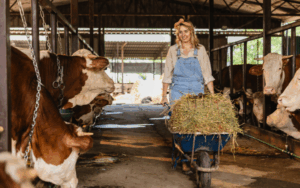
 The government has announced it will increase the inheritance tax threshold for farming businesses to £2.5 million. This decision follows a prolonged campaign from large parts of the agricultural sector against plans to set the limit at £1 million. The National Farming Union’s president, Tom Bradshaw, welcomed the announcement, saying, “It will come as a huge relief to many. While there is still tax to pay, this will greatly reduce that tax burden for many family farms, those working people of the countryside.”
What has changed and how will it work?
As part of its 2024 Budget announcement, the government revised inheritance tax measures affecting agricultural estates, effective from April 2026. Currently, many agricultural estates pay little to no inheritance tax due to reliefs extended to them if they qualify under Agricultural Relief for Inheritance Tax rules. The rules allow for between 50% and 100% relief from the normal inheritance tax rate, which is currently 40%.
The introduction of a £1 million threshold before any exemptions could be applied was strongly opposed by farming businesses, particularly small, family-owned businesses. Many farmers raised concerns that their farms would be unable to withstand the tax burden this would create. Following a year-long campaign in which farmers drove their tractors to Downing Street on multiple occasions, on 23rd December 2025 the government announced that the threshold would be increased to £2.5 million. As part of the statement, the Secretary for the Department for Environment, Food & Rural Affairs (Defra) Emma Reynolds said, “We have listened closely to farmers across the country and we are making changes today to protect more ordinary family farms. It’s only right that larger estates contribute more, while we back the farms and trading businesses that are the backbone of Britain’s rural communities.”
Agricultural inheritance tax changes that will come into effect from April 2026
- A threshold of £2.5 million will be applied to agricultural assets that are passed down, qualifying them for 100% rate of relief on IHT
- A 50% rate of relief on IHT will apply to qualifying agricultural and business property that exceeds the threshold of £2.5 million
- Upon death, any unused thresholds can be passed onto a spouse or civil partner, allowing them to pass on up to £5 million with 100% rate of relief on IHT
- An individual personal inheritance tax allowance of up to £325,000 may also be utilised and shared with a spouse
- In addition, the Residential Nil Rate Band (RNRB) of £175,000, which tapers down for estates over £2 million could be applied where assets meet the qualifying criteria
- The value of agricultural assets over and above individual or combined thresholds will qualify for 50% relief on the curent 40% rate of inheritance tax, so tax will be charged at 20%
- The inheritance tax payable can be paid in whole or in 10 equal annual instalments, free of any interest charges
What the raised IHT threshold means for farmers
The raised IHT threshold will mean that many farming businesses will no longer fall within the remit of inheritance tax, while others will benefit from a reduced IHT bill. The number of estates liable to pay more inheritance tax in 2026/27 is expected to reduce from an estimated 2,000 when the original £1 million threshold was introduced to 1,100, now that the threshold has been raised.





 MTTM AI (beta)
