
 The government is facing a significant fiscal gap or "black hole" in the public finances, widely estimated to be between £20 billion and £39 billion. This shortfall is reportedly being driven by higher-than-forecast borrowing costs and, critically, a significant downgrade to the UK's productivity outlook from the Office for Budget Responsibility (OBR).
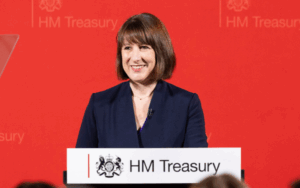
On Wednesday, 26th November 2025, Chancellor Rachel Reeves will have to deliver an Autumn Budget that finds a way to fill this gap. However, her hands are tied by two major constraints: the government's self-imposed "iron-clad" fiscal rules and a core manifesto pledge not to raise taxes for "working people", including the rates of the UK's three main taxes: Income Tax, National Insurance (NI) and VAT.
As a result, the Chancellor is having to consider a wide range of alternative measures, including "stealth" taxes and raids on wealth, property and savings. We've rounded up the biggest predictions and rumours circulating ahead of the Budget. Make sure to bookmark this article as we will continue to update it over the coming weeks.
Income tax & National Insurance
Income tax thresholds to be frozen for longer
The most widely anticipated measure to be announced in the Budget is an extension of the "stealth tax" on incomes. This is not a rate rise, but a continuation of the freeze on the Income Tax Personal Allowance (£12,570) and the Higher-Rate Threshold (£50,270). This freeze is currently set to end in April 2028, but reports suggest the Chancellor will extend it, possibly to 2030. The reason it is called a "stealth tax" is that by freezing the income tax thresholds more people are pulled into paying tax for the first time, or existing taxpayers are dragged from a lower income tax bracket to a higher one as their wages rise with inflation. If the Chancellor does this, because it is not a direct tax increase, the government could argue it doesn't break its manifesto pledge.
However, extending the freeze on key income tax thresholds gives rise to what some are calling the "Pensioner Tax Trap". The rising State Pension is forecast to overtake the frozen Personal Allowance by 2027, which would mean that, for the first time, some pensioners whose only income is the State Pension would be forced to start paying income tax.
A 2% cut to National Insurance while raising income tax by 2%.
According to the Resolution Foundation, an independent UK think tank, the Chancellor should:
- cut all rates of National Insurance (NI) by 2p in the pound
- while simultaneously raising all rates of income tax by 2p in the pound
While the so-called "2p switch" may sound tax-neutral, it is a net tax rise designed to raise an estimated £6 billion. This is because more people pay income tax than National Insurance. The move would specifically target groups who pay income tax but not National Insurance on that income, primarily pensioners (on their pension income) and landlords (on their rental income).
Redefining "Working People"
It has been reported that the Treasury is formulating an official definition of "working people" in order to allow the Chancellor to simultaneously raise taxes and not break Labour's election manifesto pledge to not increase taxes on "working people". The rumoured definition of a working person could be someone earning up to £45,000 a year. However, estimates suggest that the proposed definition would mean that as much as 30% of workers would not be deemed as "working people", and therefore vulnerable to tax rises. In addition, the average wage for a number of industries, such as finance, is already above £45,000.
By defining "working people" the Chancellor could then raise taxes on those earning over £45,000 per annum, while claiming to still be sticking to Labour's manifesto pledges. This would make a change to income tax and NI a more likely option taken by the Chancellor, perhaps in the form of the "2p switch" mentioned earlier, where the policy is tailored to be net tax neutral for "working people".
1% to 2% Income Tax rate rise
A simple increase in the rate of income tax (perhaps by 1% or 2%) had previously been ruled out by the government and commentators due to Labour's election manifesto pledge. While the idea was unthinkable politically, in recent press conferences and statements both the Chancellor and the Prime Minister have left the door open to an increase in income tax by no longer refusing to rule it out. The OBR's downgraded economic forecast also provides the Chancellor with reason to make a major U-turn and raise income tax across the board. A 1p rise in the basic rate alone would raise around £8 billion a year for the Treasury.
Capital Gains Tax (CGT)
A long-standing proposal from think tanks is to align Capital Gains Tax (CGT) rates with income tax rates. This would be a major change, meaning investors would pay 20%, 40% or 45% on profits from assets, instead of the current 18% and 24% rates. While there is no suggestion that the Capital Gains Tax allowance is going to change from the current level of £3,000, taxing income from wealth as heavily as income from work would have a political appeal for the Chancellor, especially if a broader wealth tax isn't introduced in the Budget. An increase in CGT rates would be a significant tax increase for investors, landlords selling properties and business owners selling their companies.
The "Exit Tax"
One of the most credible new proposals is a 20% "settling-up charge" on the business assets of wealthy individuals when they emigrate to a tax haven. Currently, someone can leave the UK and sell their UK assets (excluding property) without paying UK Capital Gains Tax. This new tax would aim to close that loophole, raising an estimated £2 billion. However, reports warn the policy is operationally perilous. To be effective, it must be announced as taking effect immediately on Budget Day. If it's announced for a future date (such as April 2026), it could trigger a massive capital flight as the wealthy race to leave before the law takes effect, meaning it would fail to raise the projected revenue.
Inheritance Tax (IHT)
The rules on lifetime gifting are reportedly under scrutiny. Two main changes that are rumoured to be under consideration are:
- A lifetime cap on tax-free gifts - This would potentially cap the total value of IHT tax-free gifts an individual can give away, with some speculating a cap as low as £100,000 or even £50,000. Currently, you can give away unlimited sums which become 100% IHT-free if you live for 7 years after making the gift. For more information on how IHT is currently applied to gifts read our article "Inheritance tax (IHT) taper relief on gifts explained".
- Extending the 7 year rule - Another suggestion is that the Chancellor could extend the IHT look-back period for gifts from the current 7 years to 10 years or more, making it harder to avoid IHT through lifetime gifting.
Property taxes
Property is another key area outside the manifesto pledge, with several major reforms rumoured to be under consideration.
Annual Property Tax
The most radical rumour involves a complete overhaul of the current stamp duty system and replacing it with an annual property tax, especially for homes valued over £500,000. One suggestion was that an annual tax charge of 1% could be payable on the value of your home over a stated threshold (e.g. £500,000). Such a tax would go some way to appease those calling for a wealth tax, however, critics have highlighted the difficulties in implementation. How would homes be valued and how would the tax be collected? In addition, with property forming a large part of pensioner wealth an annual property tax would hit the older voter base, unless there was an exemption based upon age. Others have voiced concerns over how the property market would be impacted by such a tax, especially at and above any proposed threshold level.
That is why a potential "Mansion Tax" (via council tax) is more likely.
The "Mansion Tax" (via council tax)
One way of increasing taxation on expensive homes, which is reportedly being considered, might involve doubling the council tax rates for properties in the top two bands: Band G and Band H. This move is estimated to raise around £4 billion. However, there are many more homes in Band G than Band H, with some estimates suggesting that roughly 80% of the £4 billion raised would be paid by Band G homeowners. This means the policy would fall heavily on "upper-middle-class" professionals, particularly in London and the South East, not just the "super-wealthy".
Another reported rumour is that rather than doubling council tax on properties in the top two council tax bands, instead, properties in the top three council tax bands (Bands F, G and H) will incur a new annual surcharge which would be payable on top of existing council tax. This would impact 2.4 million homes.
Stamp Duty (SDLT) - shift to the seller
Another proposal is to fundamentally reform stamp duty by shifting the burden from the buyer to the seller, at least for high-value homes (e.g. those over £500,000). The rationale is that this is a fairer system, as the seller is the one "realizing a gain". It would also remove a major upfront barrier for first-time buyers and those trying to move up the ladder. While some argue that such a move could stimulate transactions by unblocking buyers, critics fear it might make sellers, faced with a new tax, reluctant to sell, which would reduce supply.
NI on landlord income
While not a direct tax on property, the Chancellor is apparently considering applying National Insurance (NI) contributions to the rental income of buy-to-let landlords. Landlords currently do not pay NI on rental income, but a new 8% charge is rumoured. This would align unearned rental income with earned income and could raise as much as £2.3 billion in tax. Landlord groups have warned this cost could be passed on to tenants through higher rents.
Savings & Pensions
A reduction to the Cash ISA allowance
One of the more credible rumours is a significant cut to the £20,000 annual Cash ISA allowance, with new limits as low as £10,000 or even £4,000 being speculated. This is reportedly not aimed at generating tax revenue, although it would force more savers to pay income tax on their interest from savings. The rationale behind such a move is that it would push savers to move their money from cash into equities (particularly UK equities) in an attempt to increase long-term investment in British companies. This is not the first Budget ahead of which rumours have circulated that the Cash ISA allowance will be cut, but past rumours have proved false. Two main criticisms of such a move is that it would disproportionately hurt pensioners, who tend to hold higher cash balances, but also reduce an important source of mortgage funding for building societies, potentially causing mortgage rates to rise.
Pension Tax Relief
It's impossible to have a Budget without speculation that the pension tax relief system will be changed. One popular prediction is for the current system, which disproportionately benefits higher earners, to be scrapped and a flat 30% rate of tax relief be introduced. Under the current system you can receive tax relief on pension contributions (up to the annual limit) at your highest marginal income tax rate of 20%, 40% or 45%.
A flat 30% rate of pension tax relief would save the Treasury billions of pounds by cutting the subsidy for high earners, while simultaneously boosting the incentive for basic-rate payers (who would go from 20% to 30% relief).
Salary sacrifice cap
Reports suggest the Chancellor may be considering changes to salary sacrifice in the upcoming Autumn Budget. The move could raise an estimated £2 billion for the Treasury.
The speculation follows HMRC-commissioned research conducted earlier this year, which surveyed employers about their attitudes towards hypothetical changes to the scheme. Any change could have a significant impact not only on retirement savings but also on the financial planning many families use to access benefits, such as free childcare.
The government is not expected to abolish salary sacrifice entirely, as this would likely hit average earners the hardest. Instead, the most prominent rumour is that the Chancellor will introduce a £2,000 a year cap on the amount that can be contributed to a pension via salary sacrifice without incurring National Insurance. If this change is made, any pension contributions sacrificed above the £2,000 limit would become subject to both employee and employer National Insurance. For full details read our article "Chancellor considering ‘Salary Sacrifice Cap’: How would it impact your finances?"
Other key Autumn Budget 2025 rumours & predictions
- LLP loophole to be closed - A potential new tax charge on Limited Liability Partnerships (LLPs) to equalise the tax treatment for partners (like lawyers and accountants) who don't pay employer's NI.
- Bank windfall tax - A new, targeted tax on banks that have seen record profits from high interest rates, although a report in the Financial Times has stated this idea has been dismissed.
- Gambling duties - An increase in taxes on gambling operators, which one think tank claims could raise up to £3.2 billion.
- VAT on energy bills - In contrast to the tax increases, the Chancellor is also reportedly considering a cut to the 5% VAT on household energy bills. However, experts have pointed out that such a move would disproportionately benefit richer homeowners with larger houses, who have higher energy bills.





 MTTM AI (beta)
