
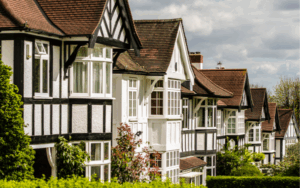
 Chancellor Rachel Reeves is weighing up a new tax on expensive properties as part of the Autumn Budget, according to reports. The Treasury is looking to property wealth as a means to raise tax revenue, having ruled out any changes to income tax, VAT or national insurance.
At this stage, a range of different options are being considered by the chancellor, one of which would be a new tax. Another would be to remove the capital gains tax (CGT) exemption that applies to people selling their primary residence. A further option could be to introduce an annual levy on homes bought above a certain price.
It has also been reported that council tax could be reformed to modernise a system based on 1991 house prices and widely thought to be unfair, though this is expected to be a long-term plan that could stretch beyond the end of this government's term.
Why does the government want to change property taxes?
The government has ruled out increasing the rates of income tax, VAT and national insurance as part of its manifesto commitment not to hike taxes for working people. It has also pledged to avoid extra borrowing to cover day-to-day expenses and recently faced a late climbdown on further benefit cuts. Unable to bring in further deep cuts or increase the major taxes, the government has limited tools left to meet its own fiscal rules.
This is why the Treasury has finally turned its attention to wealth, specifically property wealth. A broad wealth tax is seen by a number of MPs as a way to increase revenue while avoiding both cuts and income tax increases. However, the government is reportedly not convinced one would be workable. Instead, it is exploring reforming or adding to the main way wealth is taxed in the UK: buying and selling property. This means tweaks to CGT and stamp duty, and potential new property taxes.
What is the new property sales tax proposal?
One of the changes reportedly being given serious consideration by the Treasury is the introduction of a new property sales tax. Unlike stamp duty, which is paid by the buyer, the new tax would be paid by the seller. It would apply to homes sold for an amount over a certain threshold – such as £500,000 – with tax paid on the proportion of the sale price over that amount.
Critics of this plan say it would carry the same negatives that have followed stamp duty for decades, as it would still put people off from selling their homes to downsize or relocate.
Could stamp duty be scrapped?
Stamp duty (officially called Stamp Duty Land Tax or SDLT) has long been labelled a 'regressive' tax, as it disincentivises property purchases and penalises something that is otherwise considered good for the economy. The cost of stamp duty has long been thought to put older people off from downsizing and workers from relocating to different parts of the country for new employment opportunities. However, it is a big earner for the Treasury and would need to be replaced by something equally lucrative.
Currently, stamp duty is charged at 0% up to £125,000, 2% on the portion from £125,001 to £250,000, 5% on the portion from £250,001 to £925,000, 10% on the portion from £925,001 to £1.5 million and 12% on any remaining amount.
First-time buyers pay no SDLT up to £300,000 and 5% on the portion from £300,001 to £500,000. If the home costs more than £500,000, they get no extra relief. Anyone buying a second home is charged an extra 5% on top of the standard rate.
What are the reported changes to CGT?
At the moment, selling your primary residence is excluded from any capital gains tax calculations under the 'private residence exemption'. If you sell a property that is not your main residence, you will have to pay tax on any 'gain' – the increase from the price you bought it for to the price you sold it for. This is charged at 18% for basic rate taxpayers and 24% for higher rate taxpayers.
According to a report in The Times, the 'private residence exemption' could be abolished for properties sold above a certain threshold. This could raise significant revenue for the Treasury, especially if the threshold was calculated so that most of the sellers affected were higher rate taxpayers who would be charged 24% CGT. Like with changes to other property taxes, critics point to a potential market slowdown if house purchases and sales become more expensive.
Will there be a new annual property tax?
Reports in The Guardian this week have suggested that the government is exploring the prospect of an annual charge of 0.54% on the portion of a property's value above £500,000 and 0.81% on the portion above £1m. This would be a significant realigning of how property is taxed in the UK and could tie in with long-awaited council tax reforms. While a 'mansion tax' has been in the UK political lexicon for well over a decade, no party proposing one has yet had the power to push it through.
An annual tax could generate the revenue Reeves is looking for and may tick a lot of the boxes for some critics. However, it may prove politically challenging in areas where property prices are consistently above the threshold, specifically London and the South East.


 MTTM AI (beta)
